A restaurant operations SaaS I built end to end as solo founder, product manager, and engineer. Live in production with paying customers on Stripe, an AI menu scanner, real-time POS and kitchen display, guest ordering, reservations, loyalty, and analytics in one platform.
Drag the seam · wireframe ↔ shippeddesigned and built by one person
FIG.Measured Render
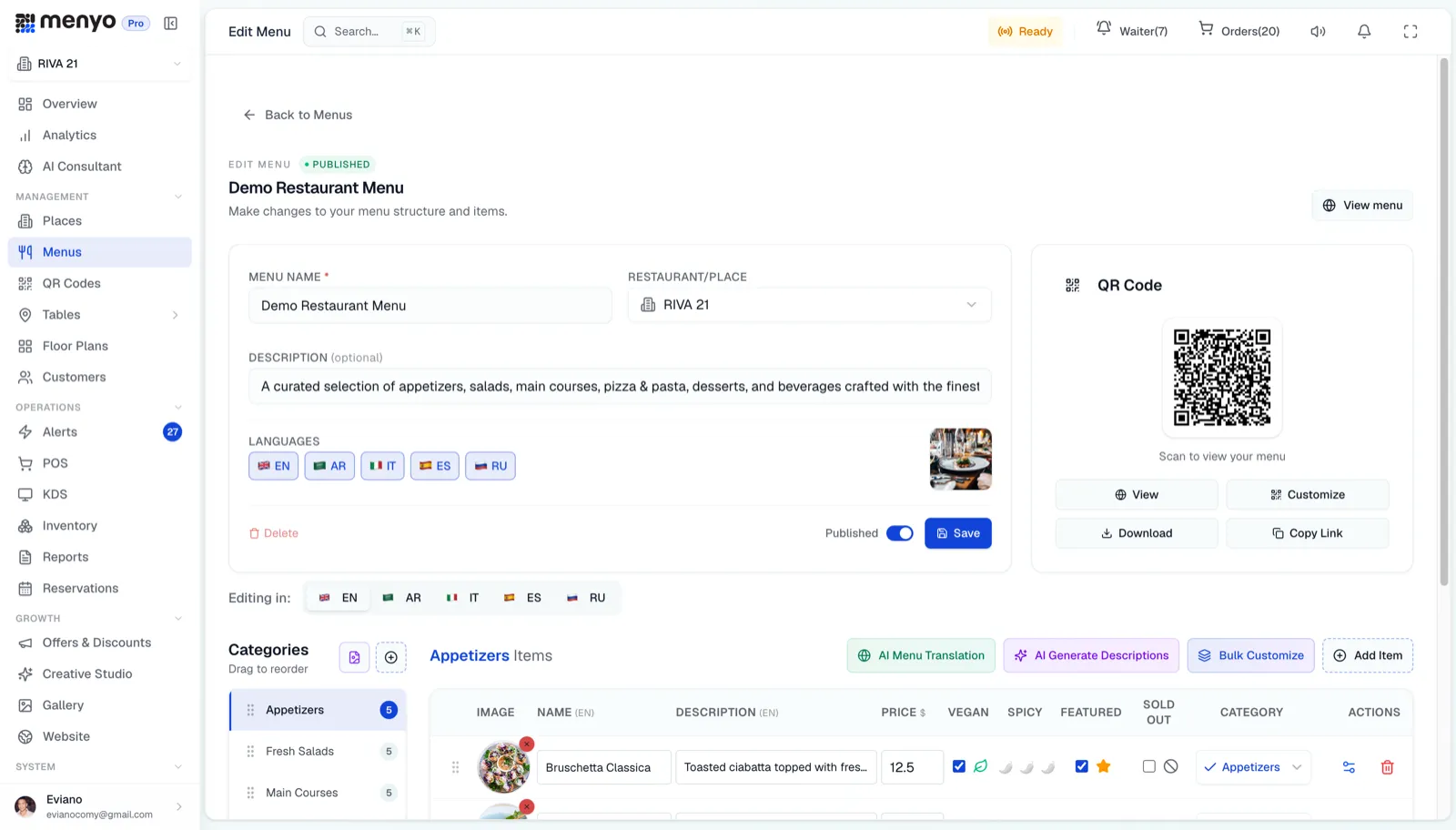
The UI, measured. The shipped screen, drawn to its own griddesigned and built by one person
A measured render: the same screen you ship, drawn as a technical drawing. Every number is a constraint someone has to hold. That is why a simple screen is so hard to build.
One person, every layer
Menyo Pro is a restaurant operations platform I designed, built, and shipped as a solo founder, product strategy, UX, AI, and full-stack engineering. It is the seam thesis made literal: a single surface where the back office, the guest, and the kitchen all run on one real-time system instead of eleven disconnected tools.The premise is simple. Restaurant owners want to go digital but hate the complexity. So the entry point is the smallest possible step, point a camera at a paper menu and get a live, multilingual digital experience in under 3 minutes, and the platform grows with them from there.Role: Founder · Product Manager · Full-stack Engineer
Timeline: 2024, present · Live in production with paying customers on Stripe subscriptions
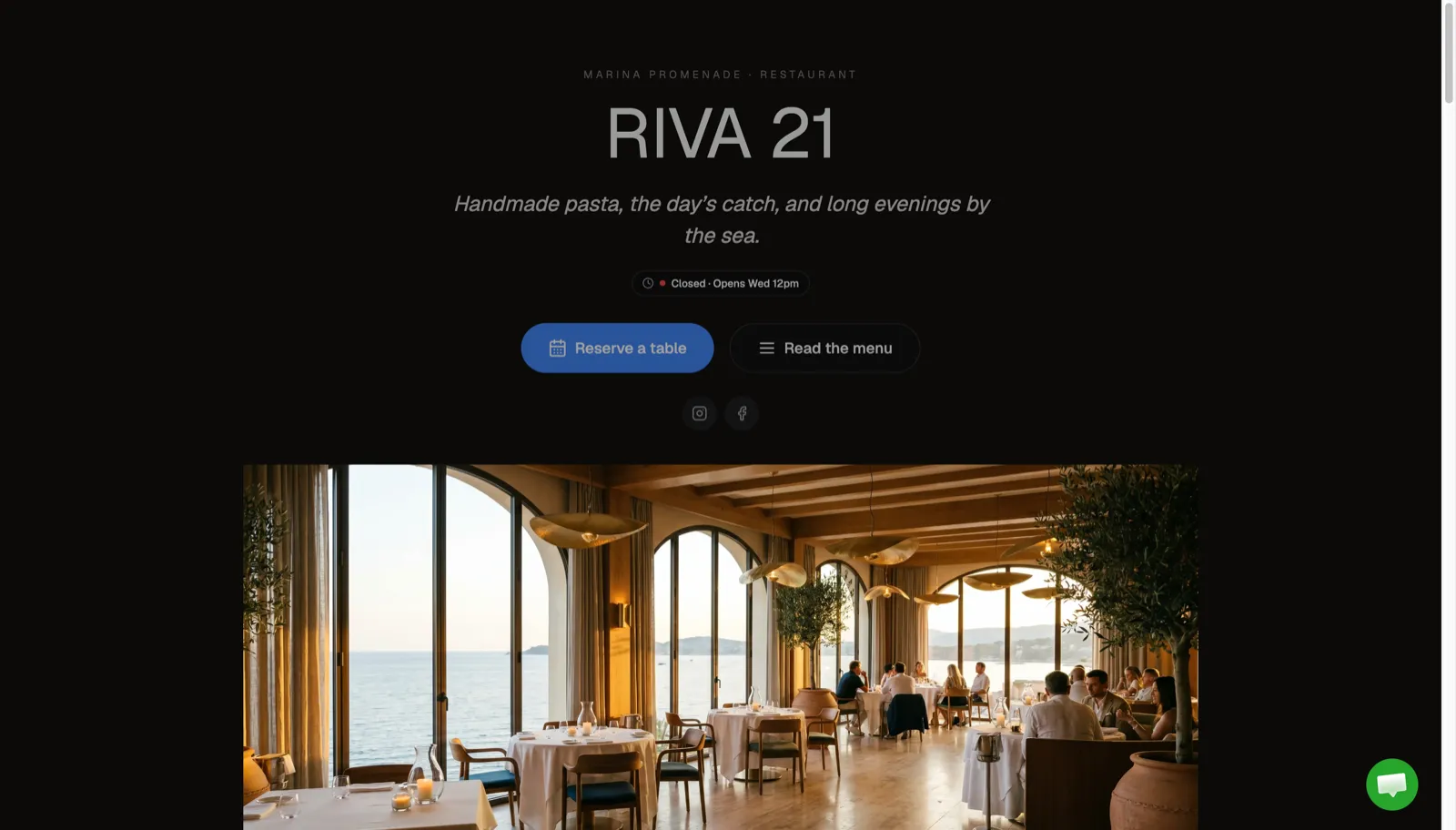
📖 The build story: Building Menyo Pro · 🔗 Live demo: riva-21.menyo.pro
The problem
Going digital usually means stitching together separate apps for menus, orders, reservations, and loyalty, each with its own login, data model, and monthly fee. The result is fragmented data, manual re-entry, and PDFs that break on a phone. Owners fly blind on what guests actually do.Menyo Pro collapses that stack into one multi-tenant system with a single source of truth.
The approach
I ran discovery with real restaurant owners. The recurring insight: they don't want features, they want problems solved fast. That set one product rule:
Every feature must either save time or make money. If it doesn't, it doesn't ship.
The architecture is built for developer velocity and real-time operations:
API: tRPC for end-to-end type safety; Prisma over PostgreSQL
Real-time: WebSocket layer with Redis pub/sub
AI: Google Gemini for menu extraction and image generation
Payments: Stripe Connect · Auth: Clerk with role-based access
What I built
1, AI menu digitization
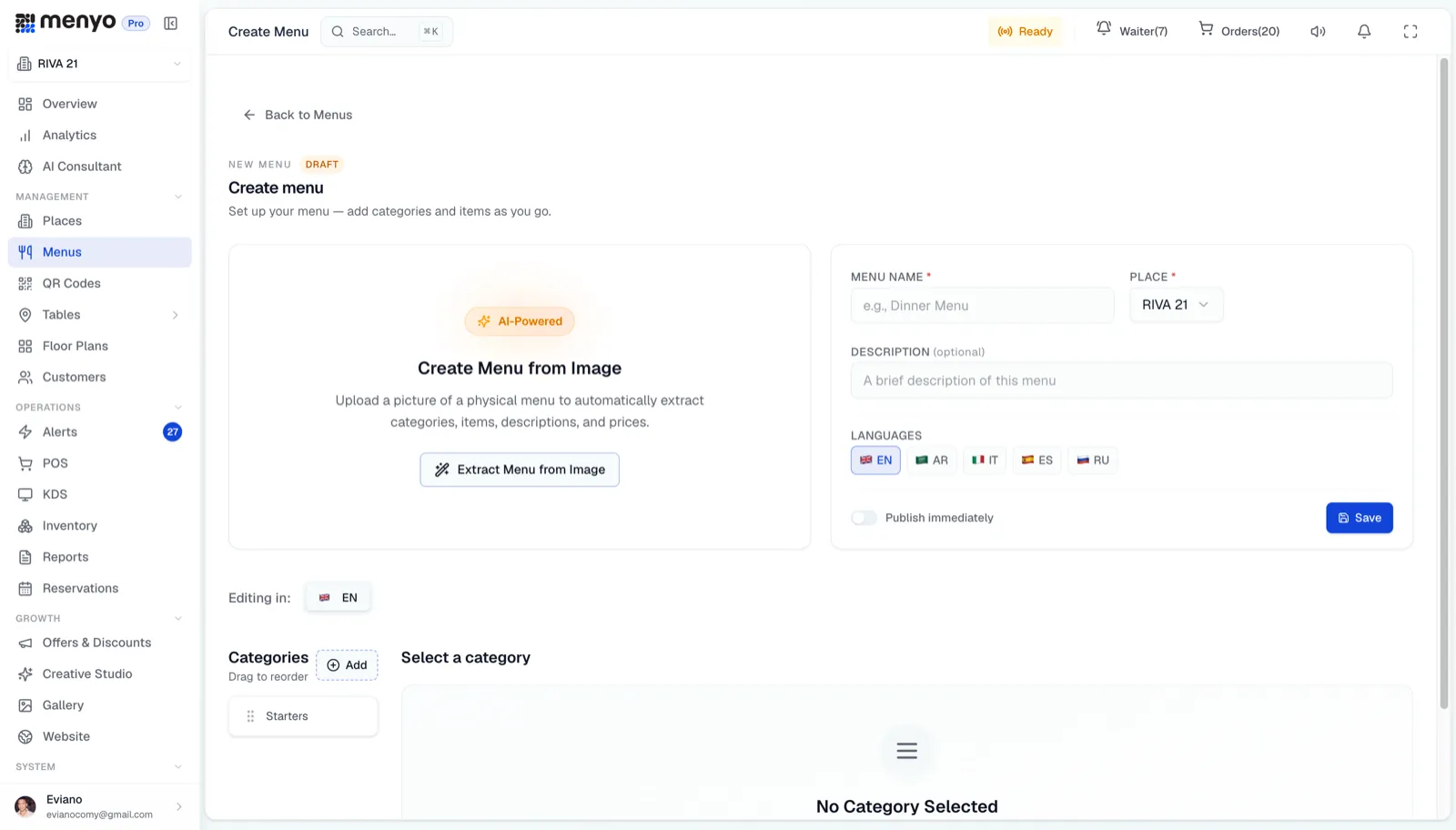
The flagship. An owner uploads a photo or PDF of an existing menu; the system extracts items, descriptions, prices, and categories automatically, multi-language and multi-currency, with structured-output validation and fallbacks for handwriting and poor scans.
2, The digital menu
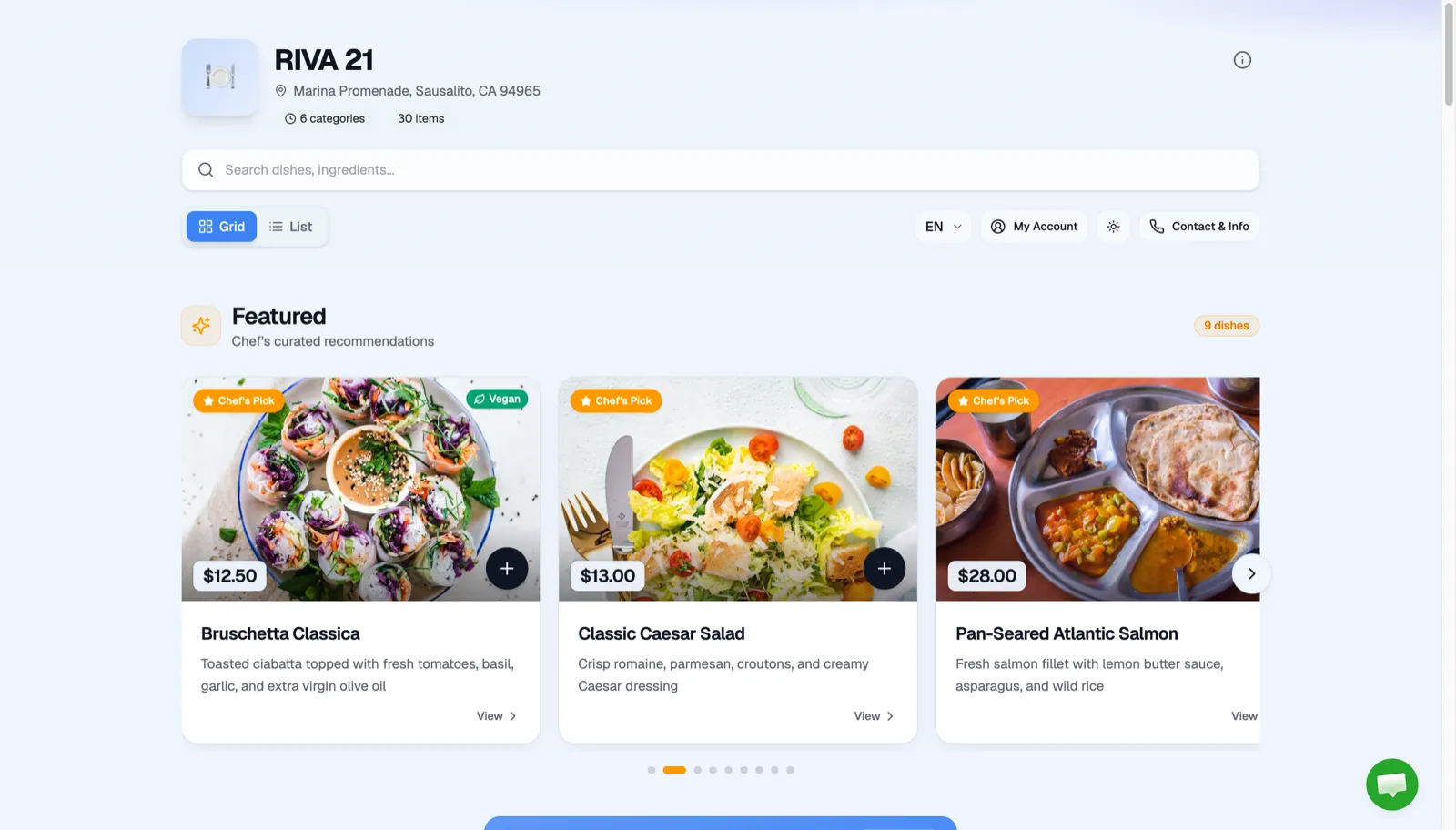
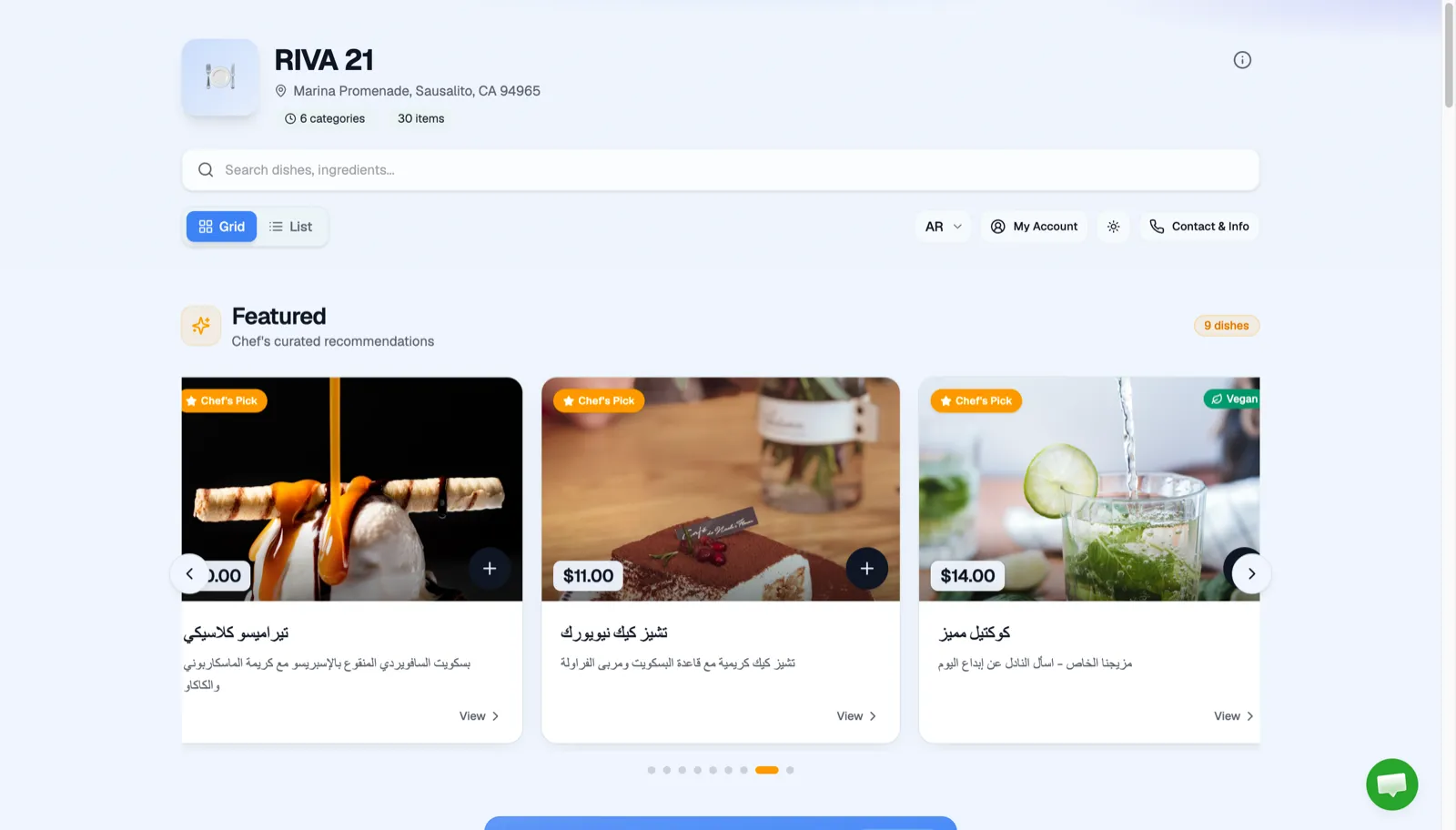
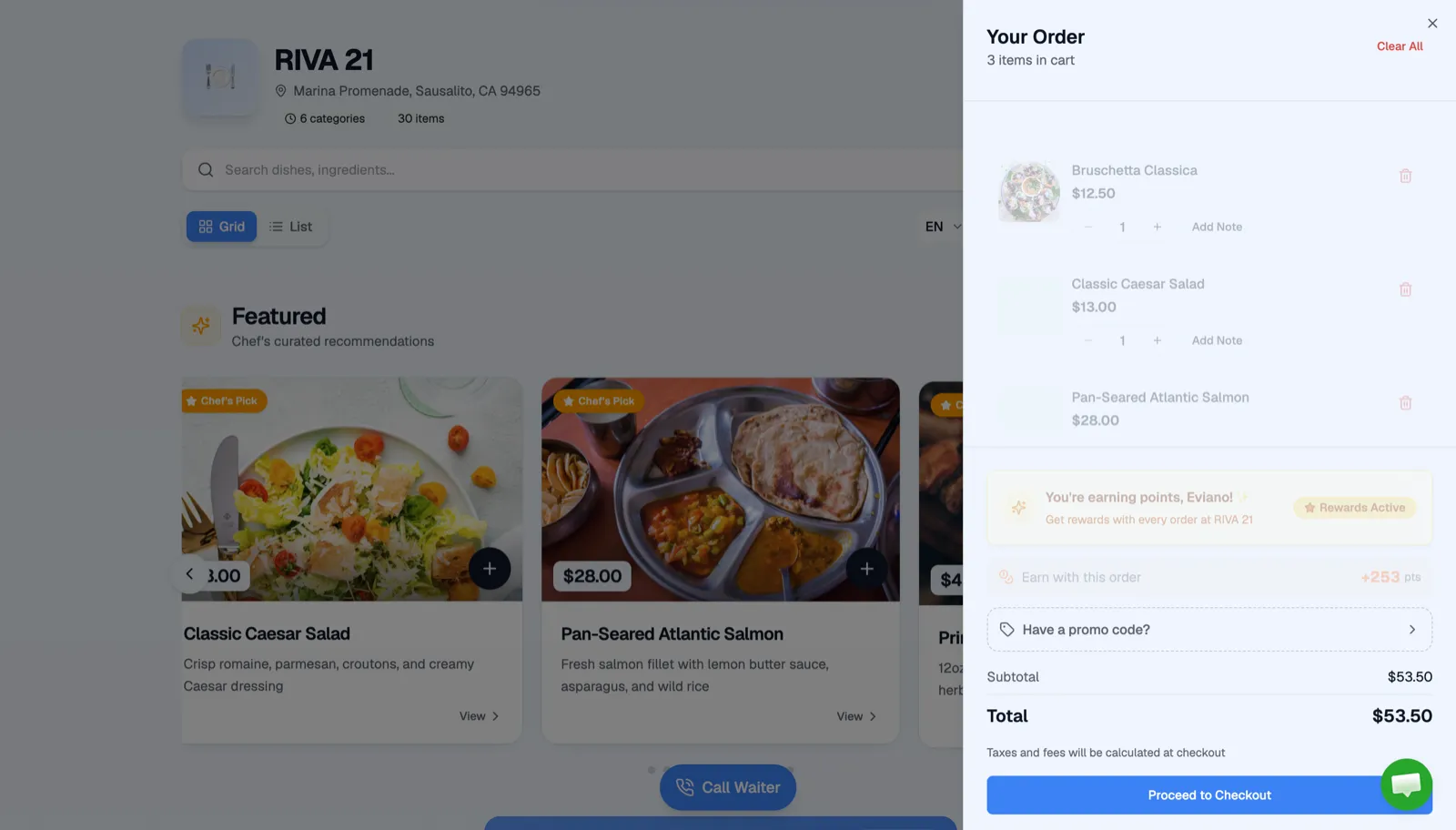
A fast, responsive guest menu with custom branding, dietary labels, modifiers, and two layout themes. Five languages, including full RTL.
3, Guest ordering
Browse, customize, and order from a phone, modifiers, promo codes, and dine-in, takeaway, or delivery modes, with confirmation by email or WhatsApp.
4, Point of sale
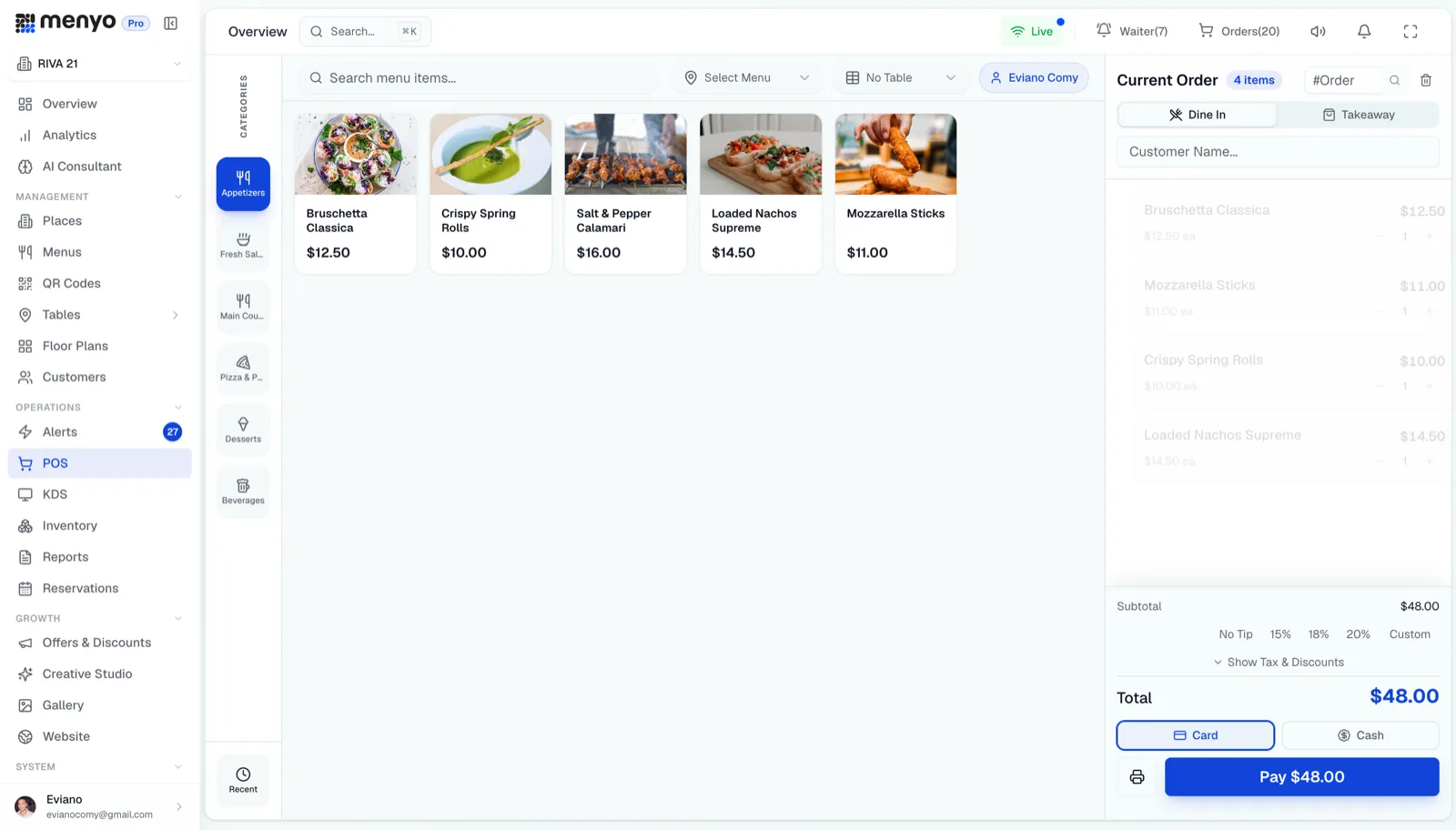
A touch-optimized POS built for tablets: quick search, modifiers and variants, table assignment, multiple payment methods, and receipts.
5, Kitchen display
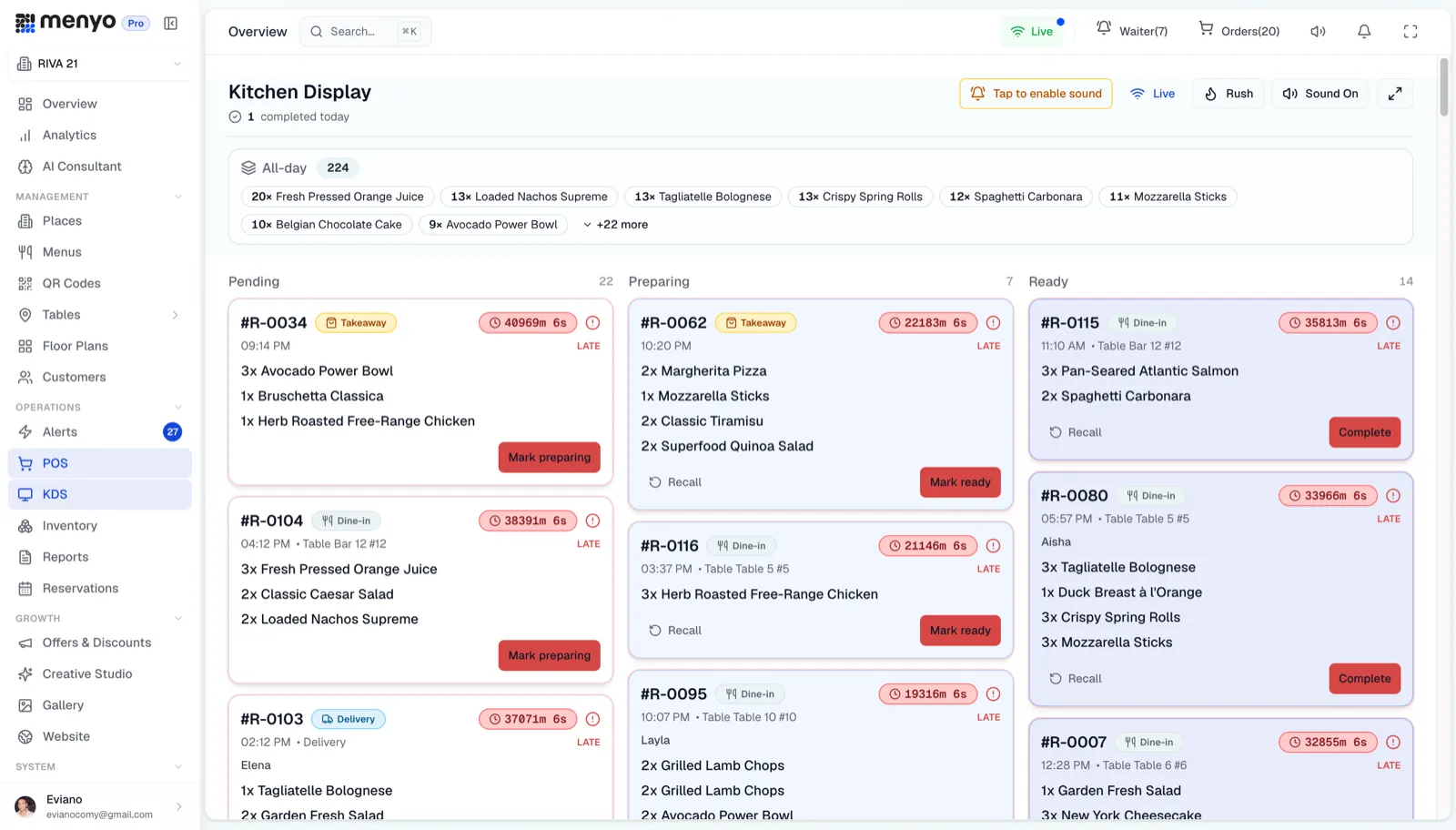
Orders flow from POS and guest ordering to kitchen screens in real time, with a Pending → Preparing → Ready workflow, urgency indicators, and bump-to-complete.
6, Reservations
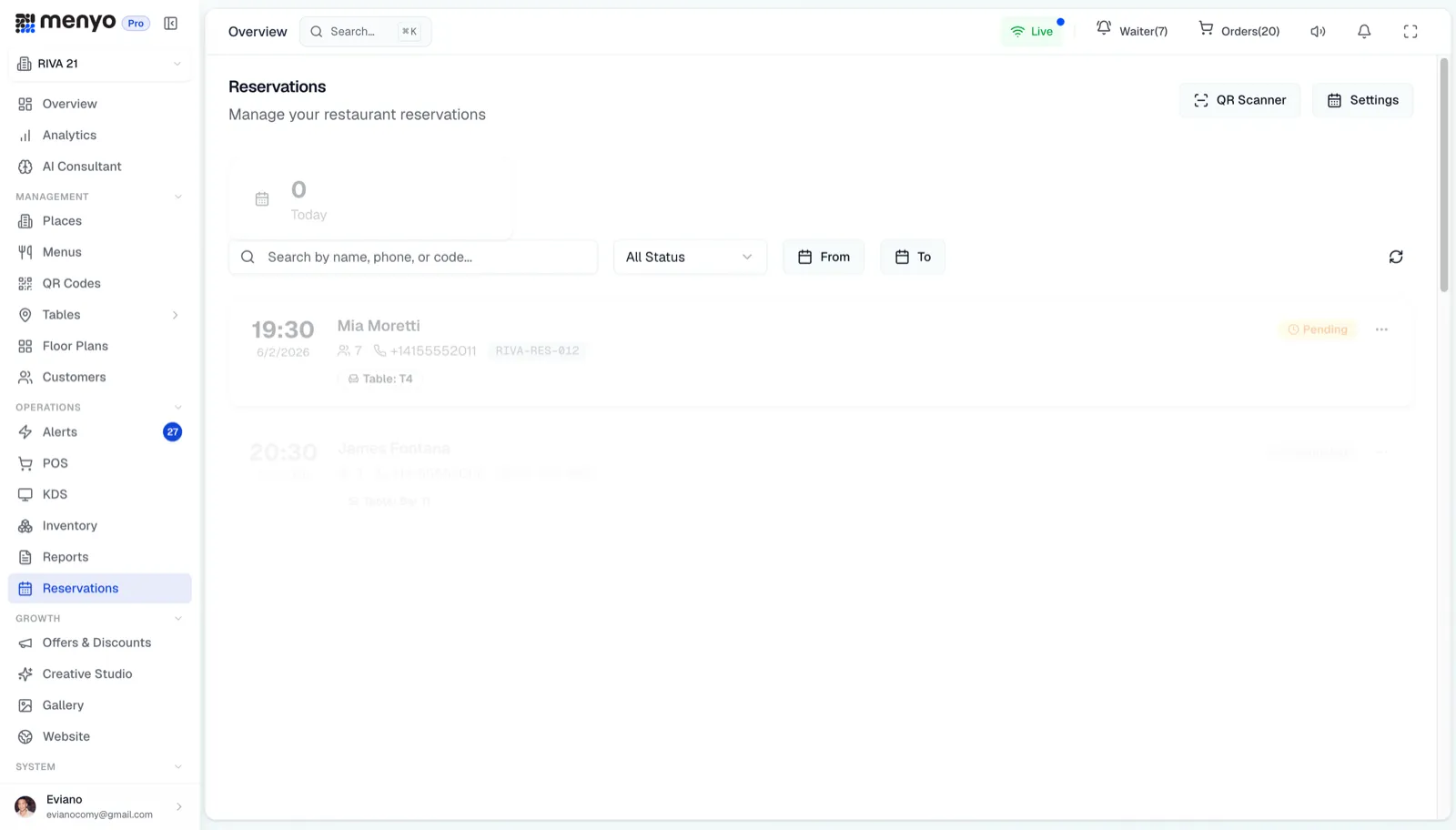
Online booking with time-slot configuration, party-size limits, confirmation emails, and a check-in scanner.
7, Loyalty & offers
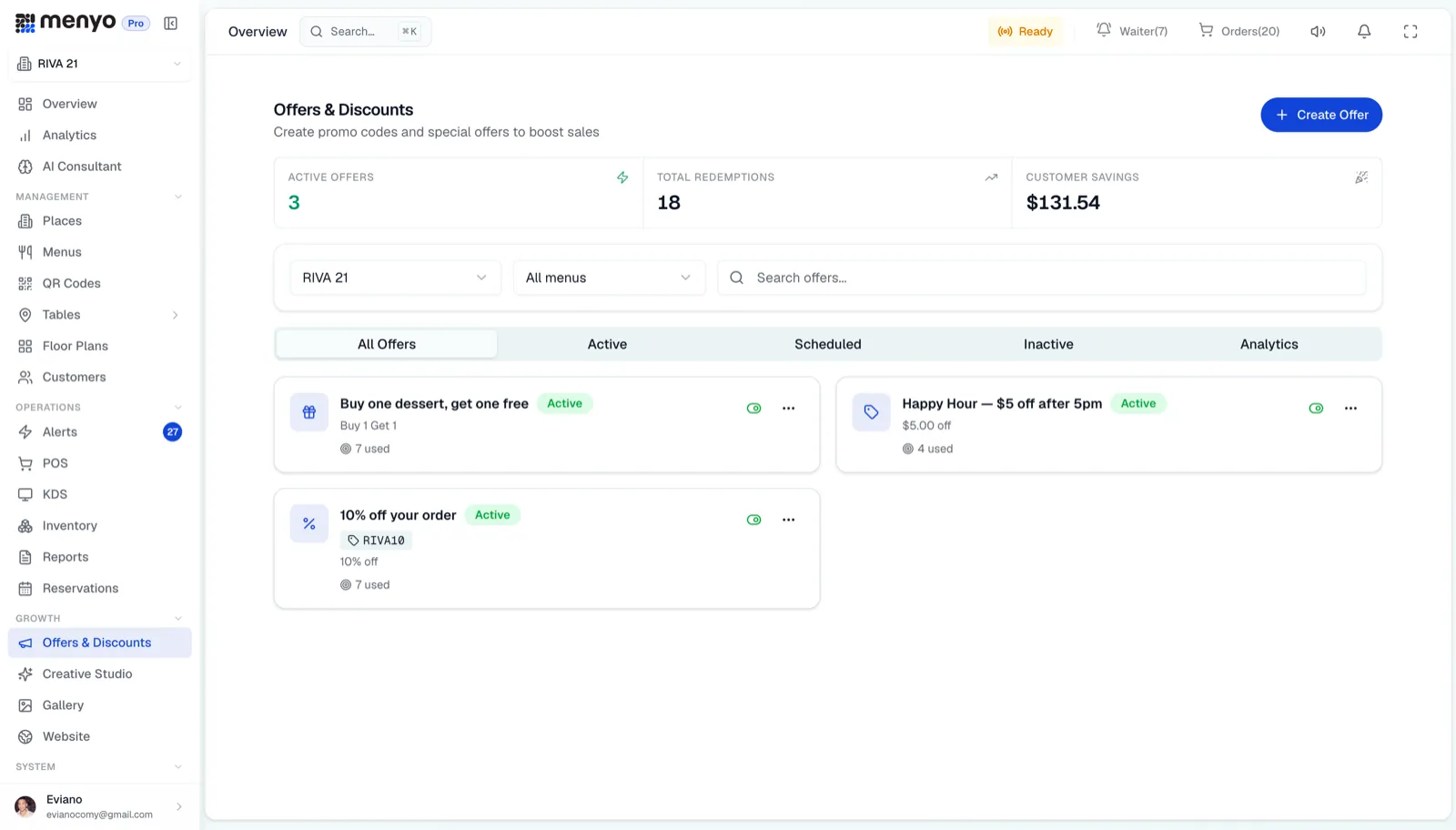
A retention toolkit: points-based loyalty with tiers, promo codes with usage limits, and auto-triggered offers like happy hour and first-order discounts.
8, Analytics
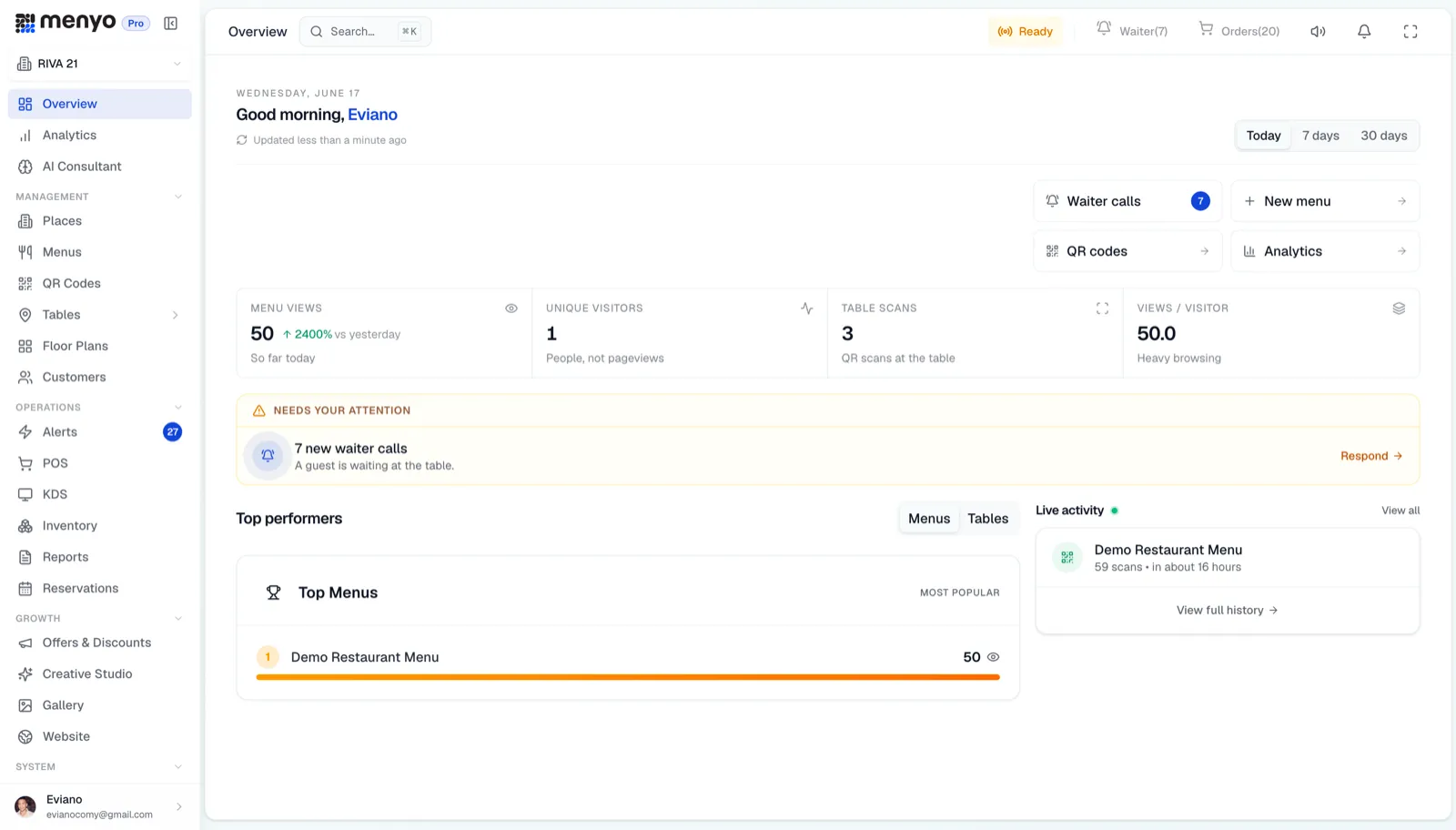
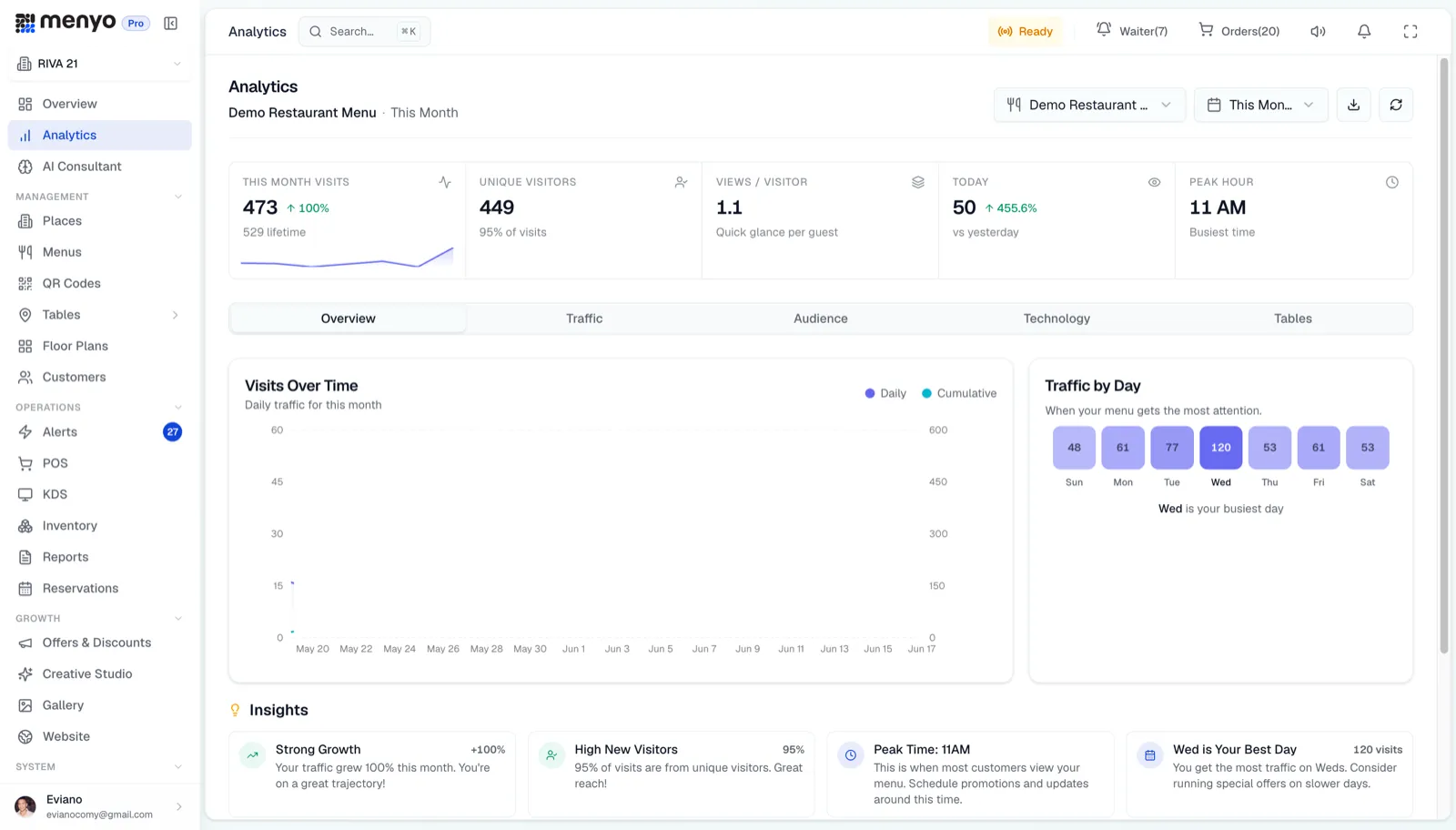
Menu-view tracking with device and location breakdowns, popular-item identification, time-based trends, and table-scan analytics, computed without slowing the guest experience.
9, QR & table management
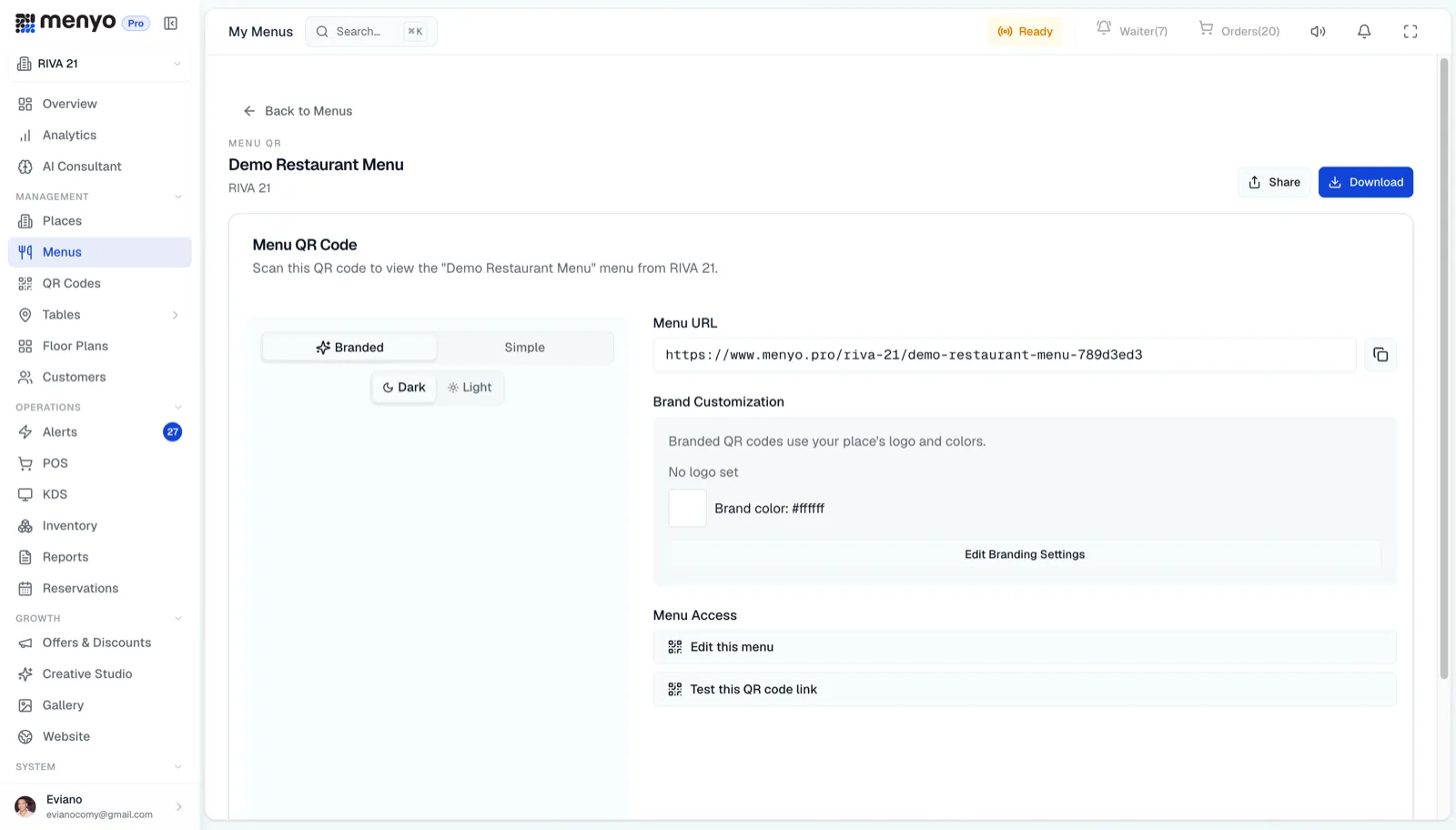
Area-based organization, unique branded QR codes per table, table-specific menu assignment, and scan tracking.
10, Place website builder
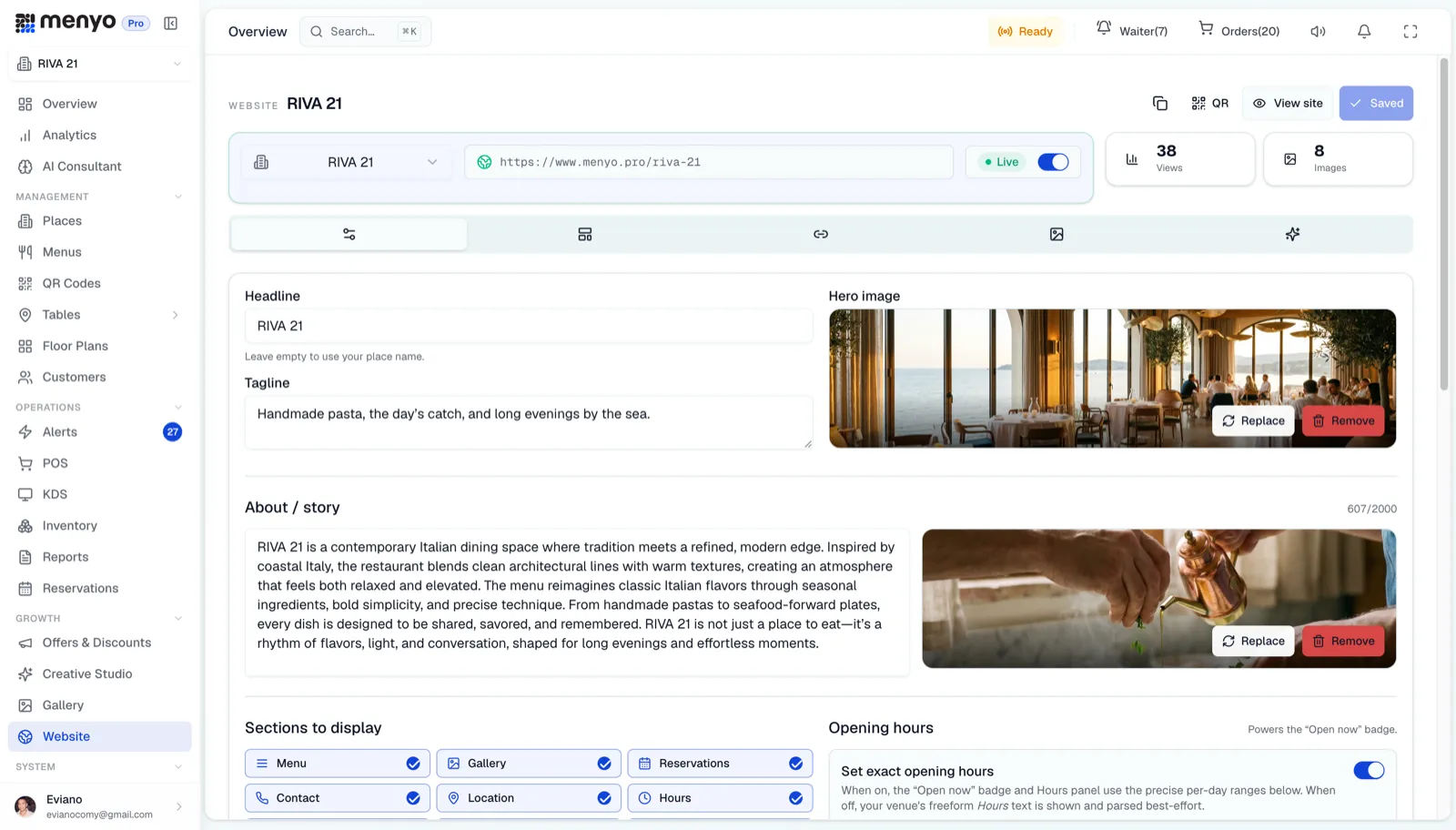
A mini-website builder so a venue can turn its menu into a linkable site, themes, gallery, social links, and SEO, built on the same data.
11, Menu management
Behind it all, an editor for items, categories, modifiers, themes, featured and sold-out states, the control surface owners live in.
Technical challenges I solved
Real-time at scale. The waiter-call and order systems need sub-second latency. Redis-backed WebSocket brokering, connection pooling, and graceful offline degradation get there.Multi-tenancy. Every query needs strict tenant isolation. Middleware enforces place-level access control across all endpoints.Analytics without impact. High-traffic menus need tracking that never slows a guest: batched inserts (25 events per write) and tiered cache invalidation (5 min → 30 min → 2 hr by data freshness).AI you can trust. Menu extraction handles multiple scripts, currencies, handwriting, and poor images via engineered prompts with structured-output validation and fallback strategies.
What it demonstrates
Layer
What I did
Product
User research, the "save time or make money" rule, feature prioritization, roadmap
UX / Design
Operator, guest, and kitchen surfaces; design system; multilingual + RTL
Twenty-plus integrated features. A 2,000-line database schema. Sub-second real-time operations. A five-tier subscription model. All held together by one person across every seam.